Choosing the 2026 best waterproof fishing waders requires more than comparing fabric labels or attractive product photos. Global buyers face different rivers, temperatures, fishing methods, and import conditions. A breathable stockingfoot wader may suit a cool trout stream, while a durable bootfoot model can perform better on muddy banks. The right choice depends on measurable performance, not marketing language.
Industry participation data shows why this category matters. The Recreational Boating & Fishing Foundation and Outdoor Foundation reported approximately 57.7 million Americans went fishing in 2023. That figure reflects strong recreational demand, although it does not represent every global market. Meanwhile, NOAA and national weather agencies continue to document rapidly changing rainfall, water temperatures, and flood risks. These conditions make seam sealing, abrasion resistance, fit, and repairability practical concerns. They are not minor features.
This guide compares 2026 waders through an evidence-based lens. It considers waterproof ratings, breathable membranes, reinforced knees, zipper construction, gravel guards, boot quality, and warranty support. Hands-on experience also matters. A leaking seam often appears after repeated kneeling, not during a short showroom test. Comfort matters too; cold water and heavy layers can quickly expose a poor fit. No model wins everywhere. That is the uncomfortable part. Some manufacturers disclose limited laboratory information, so buyers should treat performance claims carefully. Waders are not automatically flotation devices, and users should follow local water-safety guidance. The strongest recommendation is the one that matches the environment, the angler, and realistic maintenance habits.
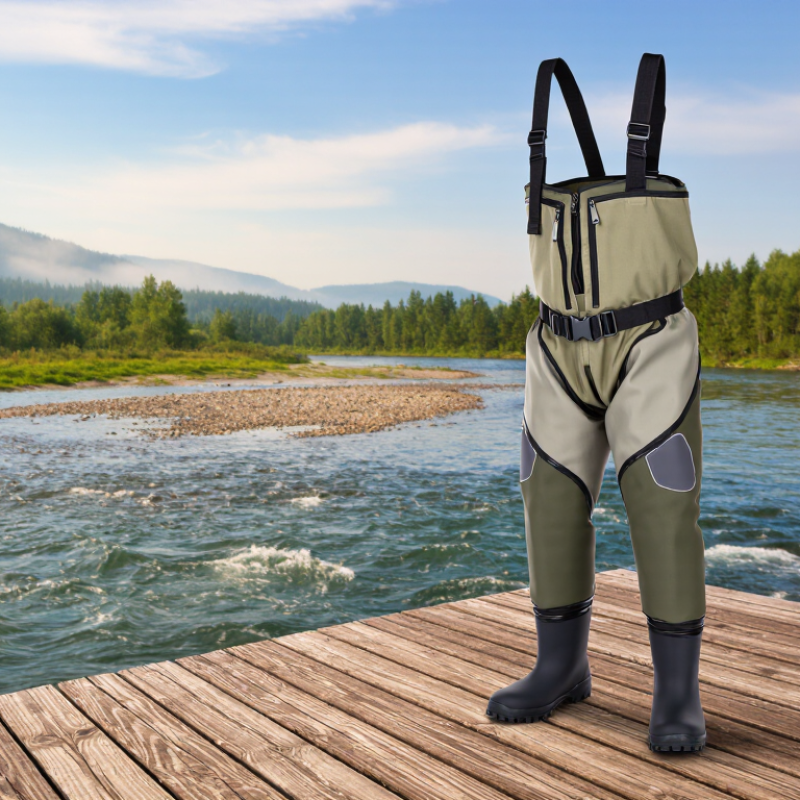
Define Waterproofing: 5,000–30,000 mm Hydrostatic Head Under ISO 811
For global buyers, waterproof fishing waders should be judged by measurable water resistance, not impressive wording. The key figure is hydrostatic head, tested under ISO 811. This test presses water against fabric until leakage appears. A 5,000 mm rating means the material withstands a water column about five metres high. It does not mean a wearer can stand five metres underwater.
Ratings from 5,000 to 30,000 mm cover very different fishing conditions. Around 5,000 mm may suit light rain and short bank sessions. Heavy rain, kneeling, wet vegetation, and repeated movement demand more margin. Values near 15,000–30,000 mm offer stronger protection, especially when fabric faces pack straps or abrasive rocks. Still, the number describes fabric performance in a controlled test. Real waders can leak through seams, zippers, pinholes, or damaged boot joins.
In practical inspections, I look at seam taping, stitching density, cuffs, and repair access. A high hydrostatic rating cannot rescue poorly sealed seams. Fit matters too. Tight stretching may increase pressure on weak areas, while loose folds can trap water and snag. Buyers should request test conditions and check whether the rating applies to the finished garment. That detail is often missing. I also question ratings measured on new fabric only, because mud, washing, and abrasion can reduce protection. No test perfectly copies a cold river, and that limitation deserves honest attention.
Compare Breathability: 3,000–20,000 g/m²/24h MVTR for Active Anglers
For 2026, waterproof fishing waders should be judged by breathability, not waterproofing alone. MVTR measures how much water vapour passes through one square metre in 24 hours. A 3,000 g/m²/24h fabric may suit slow bank fishing. It can feel damp during long walks.
For active anglers, 10,000–20,000 g/m²/24h is more practical. High MVTR helps release sweat while climbing muddy banks or carrying equipment. However, laboratory numbers need careful reading. ASTM E96 allows different test methods, and results may not compare directly. EN 343:2019 uses Ret values instead, where lower resistance indicates better breathability. Class 4 requires Ret of 15 or below. This is not a simple conversion to MVTR.
Independent textile testing guidance commonly warns that temperature, humidity, air movement, and fabric construction affect results. A 20,000 rating can still feel clammy when the wearer uses heavy layers. Seams, tight suspenders, and blocked vents also reduce real-world performance. I would inspect the test method before trusting the headline number. That step is easy to skip.
For global buyers, 8,000–12,000 g/m²/24h offers a sensible balance for mixed conditions. Choose closer to 20,000 for steep approaches and warm climates. Choose around 3,000–5,000 for lighter activity and colder, drier use. These ranges are practical guidance, not universal rules. EU Standard EN 343:2019 and ASTM E96 remain useful reference points when comparing technical sheets.
Match Climate and Fit: 3, 5, and 7 mm Neoprene Waders by Water Temperature
Choosing waterproof fishing waders starts with water temperature, not the calendar. Cold rivers can feel severe under mild air. As a practical starting point, 3 mm neoprene suits water around 10–16°C. They remain flexible during gravel crossings and active casting. However, wind and long pauses can quickly expose their limits. A snug fit matters more than extra thickness. Measure carefully.
For water around 5–12°C, 5 mm neoprene offers a useful balance of warmth and movement. It suits early spring rivers, shaded lakes, and long boat-side sessions. Wear thermal layers underneath, but leave room for breathing and bending. Tight waders compress insulation and restrict circulation. I once chose a size by height alone. My knees felt cramped after an hour. That mistake changed how I check waist, inseam, chest, and boot dimensions.
Seven-millimetre waders fit very cold water, often below 8°C, and slow fishing sessions. They retain more heat but add weight and reduce agility. In warmer climates, they can cause sweating during bank walks. Sweat can chill you later. Global buyers should compare local water temperatures, wind exposure, and fishing pace. Temperature ranges overlap because activity changes comfort significantly. Check sealed seams, reinforced knees, adjustable suspenders, and a secure waist seal. Bend, squat, and step before entering deep water. Test fit beats guesswork.
2026 Best Waterproof Fishing Waders for Global Buyers? - Match Climate and Fit: 3, 5, and 7 mm Neoprene Waders by Water Temperature
Typical neoprene wader selection guide by water temperature, climate, insulation, and fit
| Neoprene Thickness |
Recommended Water Temperature* |
Typical Air Conditions |
Insulation Level |
Mobility and Weight |
Best Fishing Applications |
Recommended Under-Layers |
Fit Considerations |
| 3 mm |
55–70°F
(13–21°C) |
Mild to warm air; spring, summer, and early autumn conditions |
Light insulation; suitable for active fishing and moderate exposure |
Lightest and most flexible of the three options; generally easiest for long walks and frequent casting |
Warm-water rivers, shallow streams, coastal flats, and mild-weather fly fishing |
Moisture-wicking base layer; add lightweight fleece when air temperatures fall |
Allow room for one thin base layer without compressing the neoprene or restricting the knees and hips |
| 5 mm |
40–55°F
(4–13°C) |
Cool to cold air; late autumn, early spring, and overcast conditions |
Medium-to-high insulation; a versatile choice for extended cold-water exposure |
More buoyant and less flexible than 3 mm; moderate weight with good warmth-to-mobility balance |
Cold rivers, lakes, estuaries, surf zones, and general shoulder-season fishing |
Thermal base layer plus medium fleece or synthetic insulation; avoid excessive bulk |
Check chest, waist, inseam, and boot dimensions carefully; a close but non-compressive fit improves thermal performance |
| 7 mm |
32–45°F
(0–7°C) |
Very cold air, strong wind, snow, or prolonged standing in cold water |
Highest insulation among the listed options; intended for severe cold-water conditions |
Heaviest and least flexible; more tiring during long hikes or repeated climbing over obstacles |
Winter steelhead fishing, icy rivers, cold surf, and stationary fishing in near-freezing water |
Thermal base layer and carefully selected mid-layer; leave enough space for circulation |
Prioritize unrestricted breathing, knee movement, and circulation; do not size so tightly that insulation is compressed |
| Selection Factor |
What to Check |
Why It Matters |
Practical Guidance for Global Buyers |
| Waterproof Construction |
Fully glued, stitched, and sealed seams; reinforced knees and seat; durable outer fabric |
Neoprene provides insulation, while seam construction and material integrity determine water resistance |
Confirm the product’s tested waterproof rating or warranty terms and inspect seam taping before use |
| Boot and Foot Fit |
Foot length, calf width, sole type, and room for thermal socks |
Poorly fitted boots can cause blisters, cold feet, reduced balance, and premature wear |
Compare measurements in centimeters and inches; allow room for socks without heel lift or toe pressure |
| Climate and Wind |
Air temperature, wind exposure, precipitation, and expected time in the water |
Wind and wet clothing can increase heat loss even when water temperatures are moderate |
Use the colder end of the temperature range for windy, wet, or stationary conditions |
| Mobility |
Articulated knees, stretch panels, gusseted crotch, and shoulder adjustability |
Mobility affects wading safety, walking comfort, casting movement, and fatigue |
Choose the thinnest thickness that meets the expected thermal requirement and activity level |
| Safety |
Waist belt, secure suspenders, non-slip soles, and proper layering |
Cold-water immersion can become dangerous quickly; waders do not replace a personal flotation device where one is required |
Wear a wading belt, avoid strong current beyond your skill level, and follow local water-safety regulations |
*Temperature ranges are practical starting points rather than guarantees. Actual comfort depends on body size, activity level, wind, current, exposure duration, base layers, and personal cold tolerance. Always follow local safety guidance and use properly fitted wading equipment.
Screen Global Purchases: EN 343 Ratings, EU/US Sizes, Warranty, and Landed Cost
2026 Best Waterproof Fishing Waders for Global Buyers?
Global buyers should read EN 343:2019 markings before judging waterproof fishing waders. The standard rates water penetration and breathability from Class 1 to Class 4. Class 4 is the strongest level in both categories. However, laboratory rain tests cannot fully copy river crossings, kneeling, or repeated seam stress. That difference matters. The EU’s PPE Regulation (EU) 2016/425 also requires conformity assessment and clear user information for certified protective equipment.
EU and US sizes are not interchangeable. Measure chest, waist, inseam, and boot size while wearing thermal layers. A loose upper body may improve movement, but oversized boots can cause dangerous footing. Product charts should show actual garment measurements, not only letter sizes. I have seen buyers select by height alone. That approach often fails. Warranty terms deserve equal attention: check coverage length, seam repair rules, exclusions, and the process for international returns.
Landed cost includes product price, freight, insurance, import duty, tax, brokerage, and possible currency fees. The World Bank’s 2023 Logistics Performance Index compares 139 economies across customs, infrastructure, and delivery reliability. Those differences can change the final invoice substantially. The U.S. Census Bureau reported 2024 retail e-commerce sales of about $1.19 trillion, showing strong online demand, but cross-border pricing remains less transparent. Keep a written cost sheet. Recheck the estimate before payment.
2026 Best Waterproof Fishing Waders for Global Buyers
Screen global purchases by EN 343 water-penetration ratings, international sizing, warranty coverage, and landed-cost factors.
EN 343 screening
Classes 3 and 4 provide higher water-penetration performance than Classes 1 and 2. Class 2 also requires testing after pretreatment.
EU/US sizing
Verify chest, inseam, boot size, and layering allowance rather than relying only on EU-to-US size labels, because wader measurements vary by cut.
Landed-cost check
Calculate product price plus freight, insurance, import duty, VAT or sales tax, brokerage, and possible return costs. Confirm warranty duration and international claim handling before purchase.
Chart data follows EN 343 water-penetration performance thresholds: Class 1 ≥8 kPa, Class 2 ≥8 kPa after pretreatment, Class 3 ≥13 kPa, and Class 4 ≥20 kPa. Always request the conformity document for the exact wader model.
Conclusion
Choosing the best waterproof fishing waders in 2026 requires more than checking a product label. Reliable waterproofing can be evaluated through a hydrostatic head of approximately 5,000–30,000 mm under ISO 811, while breathability should be considered through MVTR ratings around 3,000–20,000 g/m²/24h for anglers who move frequently. Construction also matters: three-layer laminates, fully taped seams, and reinforced knees can improve durability and comfort in demanding conditions.
Climate and fit should guide material selection. Neoprene waders in 3, 5, or 7 mm thicknesses suit different water temperatures, with thicker options providing greater insulation. For international purchases, buyers should review EN 343 performance information, confirm compatible EU or US sizing, and examine warranty coverage. Shipping, taxes, duties, returns, and other landed costs should be included when comparing waterproof fishing waders, ensuring the final choice offers practical protection, mobility, and long-term value.

 Yuelei