Choosing the best glass bottle supplier in China requires more than comparing factory prices. Buyers must examine material quality, production control, customization, and delivery reliability. A beautiful sample means little if the next shipment shows uneven walls, weak threads, or inconsistent color.
Industry data provides useful context. FEVE’s Glass Packaging Facts reports that Europe achieves an estimated glass container collection rate of about 80%. This figure highlights glass’s circular potential, but it also raises an important question. Can a Chinese supplier support that same quality discipline? Smithers’ market research also identifies continued demand for glass packaging in food, beverage, cosmetics, and pharmaceutical applications. Demand alone, however, does not prove supplier competence.
Details matter.
A reliable factory should explain its furnace capacity, inspection process, mold-making capability, and cullet usage. It should provide measurable information, including bottle weight tolerance, vertical load strength, thermal shock resistance, and defect limits. ISO 9001 certification can support process credibility, while food-contact documentation remains essential for relevant products. Certificates should be verified, not merely displayed.
FEVE Secretary General Adeline Farrelly describes the material simply: “Glass is a permanent material.” That principle makes supplier responsibility even more important. Poorly controlled production can create waste, breakage, and expensive transportation losses. The best glass bottle supplier is therefore not automatically the cheapest one. It is the partner that combines stable manufacturing, transparent testing, responsive communication, and practical environmental performance.
No supplier is perfect. Buyer assumptions also need testing. Factory audits, pilot orders, and independent inspections remain necessary before a long-term contract.
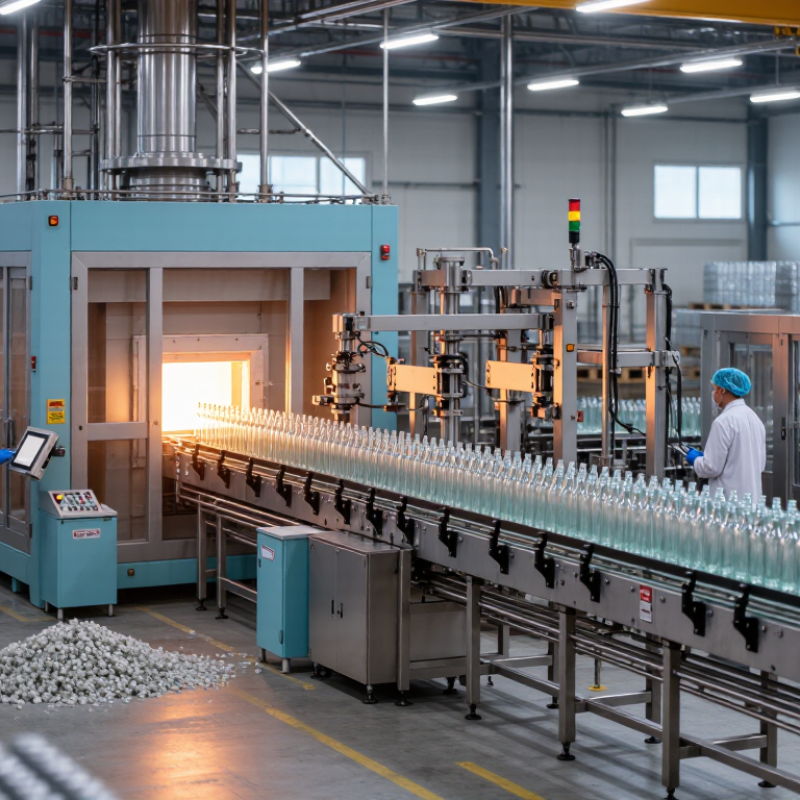
Understanding China’s Glass Bottle Manufacturing Landscape
China’s glass bottle manufacturing landscape is broad, but quality varies between factories. Grand View Research valued the global glass packaging market at about USD 62.8 billion in 2023. China remains a major production base because it combines raw materials, furnace capacity, and mature export logistics. However, scale alone does not identify the best supplier.
A reliable evaluation should examine furnace age, bottle-weight control, mold accuracy, annealing performance, and inspection records. Ask for batch-level test results, not attractive samples only. ISO 9001 certification can support process discipline, but it cannot replace an independent factory audit. The British Standards Institution notes that container glass defects can affect sealing, strength, and filling-line efficiency. Small issues become expensive quickly. A slight neck variation may cause repeated cap failures.
Tips: Request a pilot order before signing a large contract. Test color, dimensions, thermal shock resistance, and surface defects. Confirm whether the quoted weight includes packaging. Also review rejection rates and corrective-action records. These details reveal more than a sales presentation.
The best supplier is usually the one with stable production, transparent communication, and realistic lead times. Very low pricing deserves careful questioning. It may reflect thinner glass, weaker inspection, or outdated equipment. No factory is perfect. I would still prefer a supplier that openly reports problems and fixes them quickly. Reports from the International Organization for Standardization also emphasize documented controls and continual improvement, which are practical indicators of manufacturing reliability.
China’s Glass Bottle Manufacturing Landscape
Representative composition of soda-lime glass commonly used for food, beverage, and pharmaceutical bottles
Silica is the primary glass-forming material, while soda ash lowers the melting temperature and limestone improves chemical durability. Alumina and other minor additives help enhance strength, color, and processing performance. Actual formulations vary according to bottle usage, color, recycled-glass content, and production requirements.
Key Criteria for Evaluating a Glass Bottle Supplier
What Is the Best Glass Bottle Supplier in China?
Key Criteria for Evaluating a Glass Bottle Supplier
Choosing a glass bottle supplier requires more than comparing unit prices. In practical sourcing work, I examine production capacity, material control, and quality records. Ask whether the factory melts its own glass or purchases processed material. This affects consistency.
Request samples from different production batches. Check the bottle’s weight, neck finish, wall thickness, and base stability. Small variations can cause filling or capping problems.
A reliable supplier should provide clear testing evidence. Useful checks include thermal shock, pressure resistance, drop performance, and visual inspection. For food, beverage, or cosmetic packaging, request current food-contact documentation and traceability records.
The supplier should explain how defects are isolated and corrected. Look closely at the inspection area. Clean workspaces, calibrated equipment, and trained operators are meaningful signals. Photos alone are not enough.
Commercial details also deserve careful review. Confirm minimum order quantities, mold ownership, sample charges, packaging methods, and realistic lead times. Ask how bottles are protected inside export cartons.
Broken glass often reveals weak packing rather than weak manufacturing. Communication matters too. A technical contact should answer questions with measurements, not vague promises.
Low pricing can be attractive, but I have learned that the cheapest offer may hide mold, freight, or rejection costs. My own evaluations are not perfect. I sometimes focus too heavily on specifications and overlook response speed. That mistake is expensive. Consistent follow-up usually tells more than a polished presentation.
Assessing Certifications, Pricing, Minimum Orders, and Lead Times
Choosing the best glass bottle supplier in China requires more than comparing online prices. Certifications should match your market and product use. Ask for current food-contact documents, factory quality certificates, material declarations, and independent test reports. Verify the issuing laboratory and check whether documents cover the exact bottle, coating, and closure. A certificate copied from an old project is not enough.
Pricing depends on glass weight, bottle shape, color, decoration, packaging, and shipping terms. Request an itemized quotation, including mold fees, sampling charges, cartons, and inspection costs. Minimum orders may range from a few thousand pieces to much larger volumes. Smaller orders often carry higher unit prices. A low quote can look attractive, but I have learned that missing packaging costs create unpleasant surprises later. Supplier experience matters here, especially when specifications change after sampling.
Lead times should separate mold development, sample approval, production, inspection, and delivery. A standard bottle may ship sooner, while a custom design can require several weeks or more. Ask for a written schedule with responsible contacts and delay procedures. Production capacity should be supported by recent factory records, not only promises.
Tips: Order physical samples. Test leakage, wall thickness, weight, and closure fit. Confirm the minimum order in writing. Leave extra time for seasonal factory congestion. A clear approval process prevents expensive rework.
What Is the Best Glass Bottle Supplier in China? – Assessing Certifications, Pricing, Minimum Orders, and Lead Times
| Supplier Profile |
Typical Product Focus |
Common Certifications & Documents |
Indicative Unit Price
(FOB China, USD) |
Typical MOQ |
Standard Lead Time |
Custom Mold Lead Time |
Best Fit |
| Profile A |
Standard clear beverage bottles, 250–750 ml |
ISO 9001; food-contact declaration; lead and cadmium test report; third-party inspection available |
$0.18–$0.42 |
10,000–30,000 pieces |
20–35 days |
35–55 days |
Cost-conscious beverage launches and regular stock designs |
| Profile B |
Amber pharmaceutical and supplement bottles, 30–500 ml |
ISO 9001; ISO 15378 commonly available; USP/EP-related test reports upon request; light-protection testing |
$0.12–$0.55 |
20,000–50,000 pieces |
25–45 days |
45–65 days |
Pharmaceutical, nutraceutical, and herbal products |
| Profile C |
Cosmetic jars and bottles, 30–200 ml |
ISO 9001; REACH-related material declarations; EU food-contact documentation for applicable glass; SGS testing available |
$0.35–$1.60 |
3,000–10,000 pieces |
25–40 days |
40–60 days |
Premium skincare, fragrance, and private-label cosmetics |
| Profile D |
High-volume food and sauce containers, 100–1,000 ml |
ISO 9001; food-contact declaration; EU Regulation 1935/2004 documentation; FDA 21 CFR compliance statements for relevant applications |
$0.16–$0.65 |
30,000–100,000 pieces |
20–35 days |
40–60 days |
Large-volume food, condiment, and beverage programs |
| Profile E |
Decorative and premium spirits bottles, 200–750 ml |
ISO 9001; food-contact declaration; coating and ink migration reports; color, coating, and dimensional inspection records |
$0.70–$3.20 |
5,000–20,000 pieces |
35–55 days |
50–75 days |
Distinctive packaging and premium gift products |
| Profile F |
Low-MOQ stock bottles for testing and small brands |
Basic material specification; food-contact declaration when applicable; pre-shipment inspection available |
$0.25–$1.20 |
500–3,000 pieces |
10–25 days |
35–50 days |
Prototype validation, market testing, and small initial orders |
Data note: Price, MOQ, and lead-time figures are indicative ranges for commonly traded glass bottle specifications in China. Actual quotations vary according to glass color, capacity, neck finish, decoration, packaging, testing requirements, order quantity, and shipping terms. Certification availability should be confirmed by requesting current certificates, test reports, and product-specific compliance declarations.
Selecting the Best Supplier for Your Business Requirements
Selecting the best glass bottle supplier starts with your product requirements, not the lowest quotation.
Define volume, neck finish, capacity, glass color, decoration, and filling conditions. A supplier should provide drawings, food-contact documents, batch traceability, and inspection records. The 2024 Grand View Research report estimated the global glass packaging market at approximately USD 82 billion in 2023, with continued growth through 2030. This scale creates choice, but also creates inconsistent quality between factories.
Request production samples from at least three suppliers. Test wall thickness, weight, pressure resistance, thermal shock, closure fit, and leakage. Ask for the supplier’s acceptable quality limits and corrective-action process. FEVE states that glass packaging is fully recyclable and can be recycled repeatedly without losing quality. That environmental advantage matters, but it does not replace reliable delivery. A supplier with strong equipment may still struggle with small orders or custom molds. I have seen attractive samples fail during filling trials. Specifications must survive real production.
Tips:
Compare total landed cost, not unit price. Include mold fees, packaging, inspection, freight, breakage, and replacement stock. Check whether the supplier can maintain your target output during peak seasons. A written quality agreement is essential. Consider an independent pre-shipment inspection. Do not trust polished presentations alone. Your first order should be treated as a controlled test, not a permanent commitment. Even experienced buyers miss small details, especially carton strength and cap compatibility. Those details become expensive later.
Conclusion
Choosing the best glass bottle supplier in China requires more than comparing quoted prices. Buyers should first understand the country’s diverse manufacturing landscape, where suppliers may differ significantly in factory scale, equipment, technical expertise, and export experience. A reliable evaluation should focus on product quality, material consistency, molding accuracy, surface finishing, packaging, and the supplier’s ability to provide customization such as unique shapes, colors, closures, and printing. Production capacity is also important, especially for businesses that expect demand to grow or require consistent supply across multiple orders.
Before making a decision, companies should review relevant certifications, quality-control procedures, minimum order quantities, pricing structures, payment terms, and realistic lead times. Samples and small trial orders can help verify performance before full production begins. Ultimately, the best glass bottle supplier is the one that matches a business’s product specifications, budget, order volume, delivery schedule, and communication needs while maintaining dependable quality and responsive service.
 Yuelei
